
Restoring the hamlet sustainably
We aimed to consider environmental impact at every stage of the project.
Building materials
Waste was sorted and taken to a recycling centre. None was burned or buried.
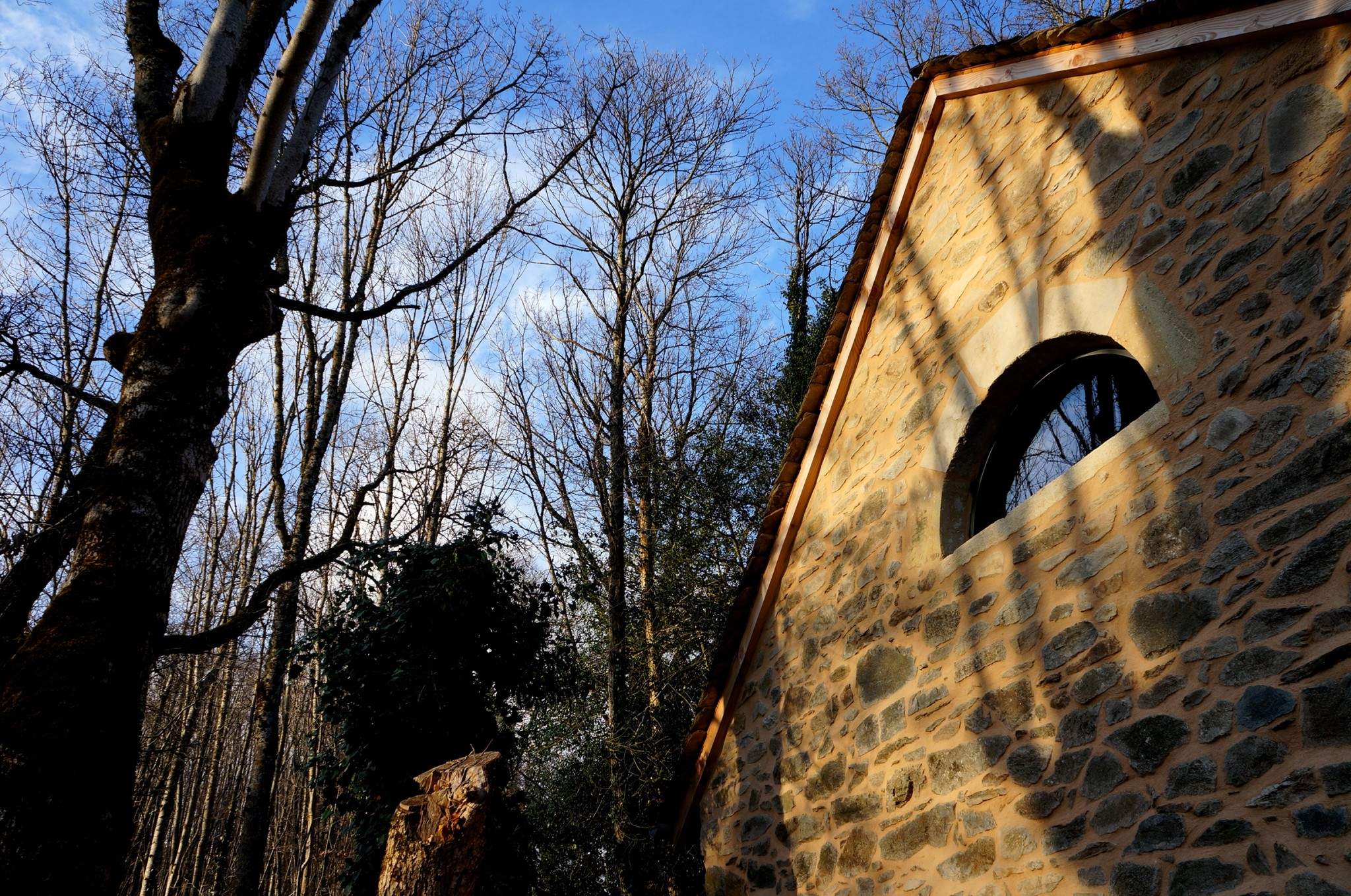
We reused materials from the site wherever possible, including wood, stone and stone roof tiles.
Roof timbers made from northern fir and poplar from French forests
Burgundy oak flooring
Wall plaster made with Saint-Astier lime
Blanchon environmental range wood treatments
Natural insulation, including wood wool, hemp wool, flax fibres and lime-hemp plaster
Furnishings and decoration
Natural upholstery fabrics and household linen, including silk, linen, wool and cotton
Fair-trade furniture and textiles made by artisans
Cleaning
We use biodegradable cleaning products based on essential oils for the cottages, the professional kitchen and laundry.
We also have two steam vacuum cleaners.
Energy
A central wood-pellet boiler provides heating and hot water for the hamlet.
Low-voltage LED lighting indoors and outdoors
Water management

Three septic tanks are connected to a planted sand filter with several sand grades.
Two lined, landscaped ponds collect rainwater from the south-facing roofs.
A 3,500-litre tank collects water from the north-facing roofs.
The water is used to irrigate the gardens.
Green spaces

The hamlet
Its hidden inhabitants
We maintain the grounds without pesticides and work with natural cycles, including flowering and breeding seasons for native animals, birds and insects.
We preserve field boundaries and hedgerows and plant wildflower meadows on the banks.
We build insect shelters and bird boxes.
Paths are surfaced with wood chips to reduce the need for weeding.
Grounds maintenance
We use no mineral fertilisers, insecticides, fungicides or herbicides. Instead we use methods approved for organic pest control, such as black soap and vegetable oil.
We make our own fermented plant extracts using local wild plants and Éric Petiot’s method.
We use chipped branches from our pruning work to improve the soil around trees.
We use traps to control pine processionary moths.
Organic growing at the Domaine
We planted a medicinal herb garden and a vegetable garden using companion planting.
We buy organic vegetable seeds from suppliers including Cocopelli and Magelan.
Our orchard contains only heritage varieties supplied by the Croqueurs de Pommes association.